Verifying Suspicious Domains Beyond Obvious Indicators
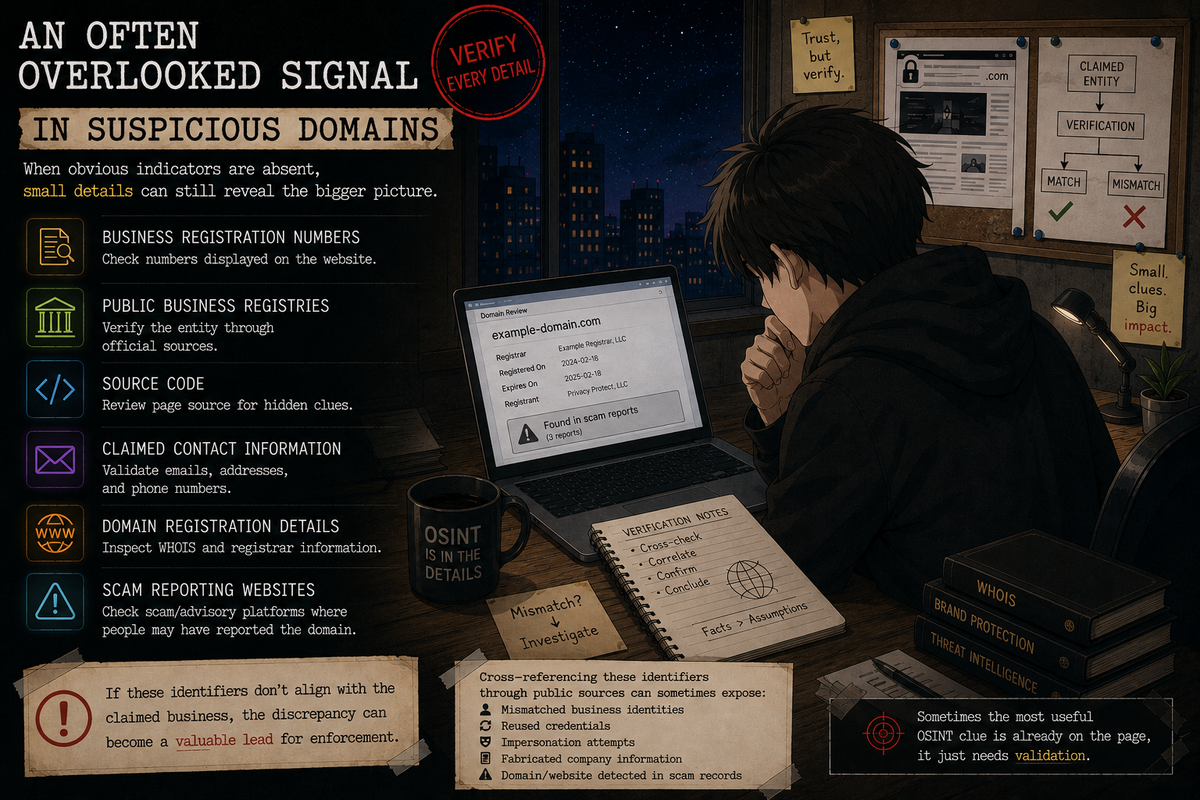
While investigating suspicious phishing domains, obvious indicators such as credential-harvesting interfaces or malicious payloads may be absent. In such cases, secondary verification points can provide useful investigative leads.
Common verification points include:
- Business registration numbers
- Public business registries
- Website source code
- Claimed contact information
- Domain registration details
- Scam reporting/advisory websites where users may have reported fraud associated with the domain
Cross-referencing these identifiers through public sources can sometimes expose:
- Mismatched business identities
- Reused credentials
- Impersonation attempts
- Fabricated company information
- Domains/websites previously reported in scam records
If the identifiers associated with a domain do not align with the claimed organization, the inconsistency itself can become a valuable signal during enforcement or abuse reporting workflows.
Sometimes the most useful investigative clue is already present on the page, it simply requires validation.