Looking Beyond Visible Content During Phishing Investigations
During a phishing investigation, I encountered a domain that appeared to be associated with a well-known retail brand. The domain contained login and registration pages designed to collect user credentials, yet something unusual stood out during the initial review.
Despite the presence of credential-capture functionality, the targeted brand was not mentioned anywhere on the visible pages.
Initial Observation
At first glance, the website appeared to contain little more than generic discount content. While the domain name itself referenced a recognizable brand, the visible pages lacked the branding elements typically used to support a phishing assessment.
Without clear evidence of impersonation on the front end, the case could potentially be viewed as a trademark issue rather than a phishing operation.
Verification
Rather than relying solely on visible content, I decided to review the website's source code and metadata.
This deeper inspection revealed hidden organizational information that falsely presented the website as being associated with a legitimate retail entity.
Additional references linked the website to official social media accounts belonging to unrelated well-known brands. These associations were not visible to ordinary visitors but appeared designed to reinforce a false impression of legitimacy.
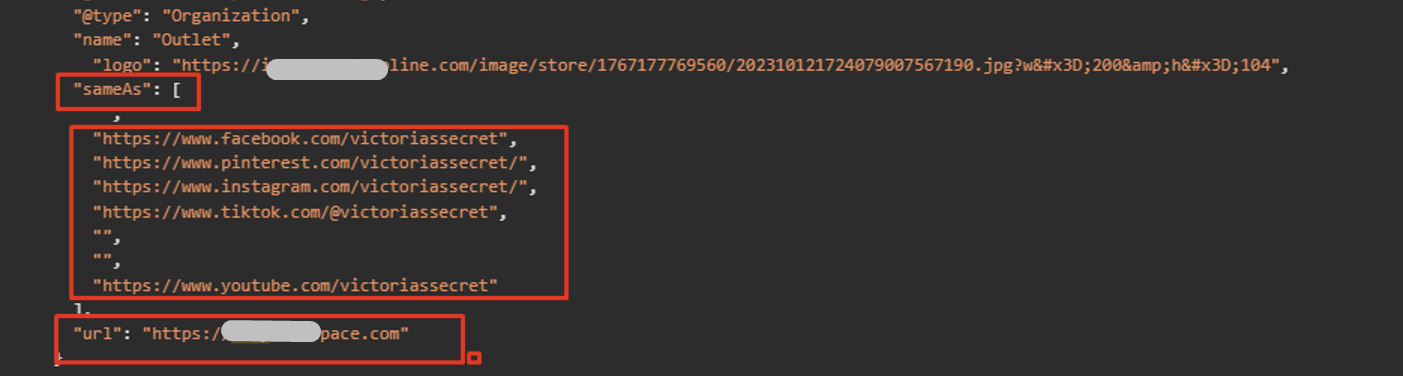
To determine whether the hidden references were meaningful, I validated the website's structured data and organizational metadata. This confirmed that the domain was presenting itself as an organization associated with unrelated legitimate brands through embedded social media references and organizational attributes that were not visible on the website itself.
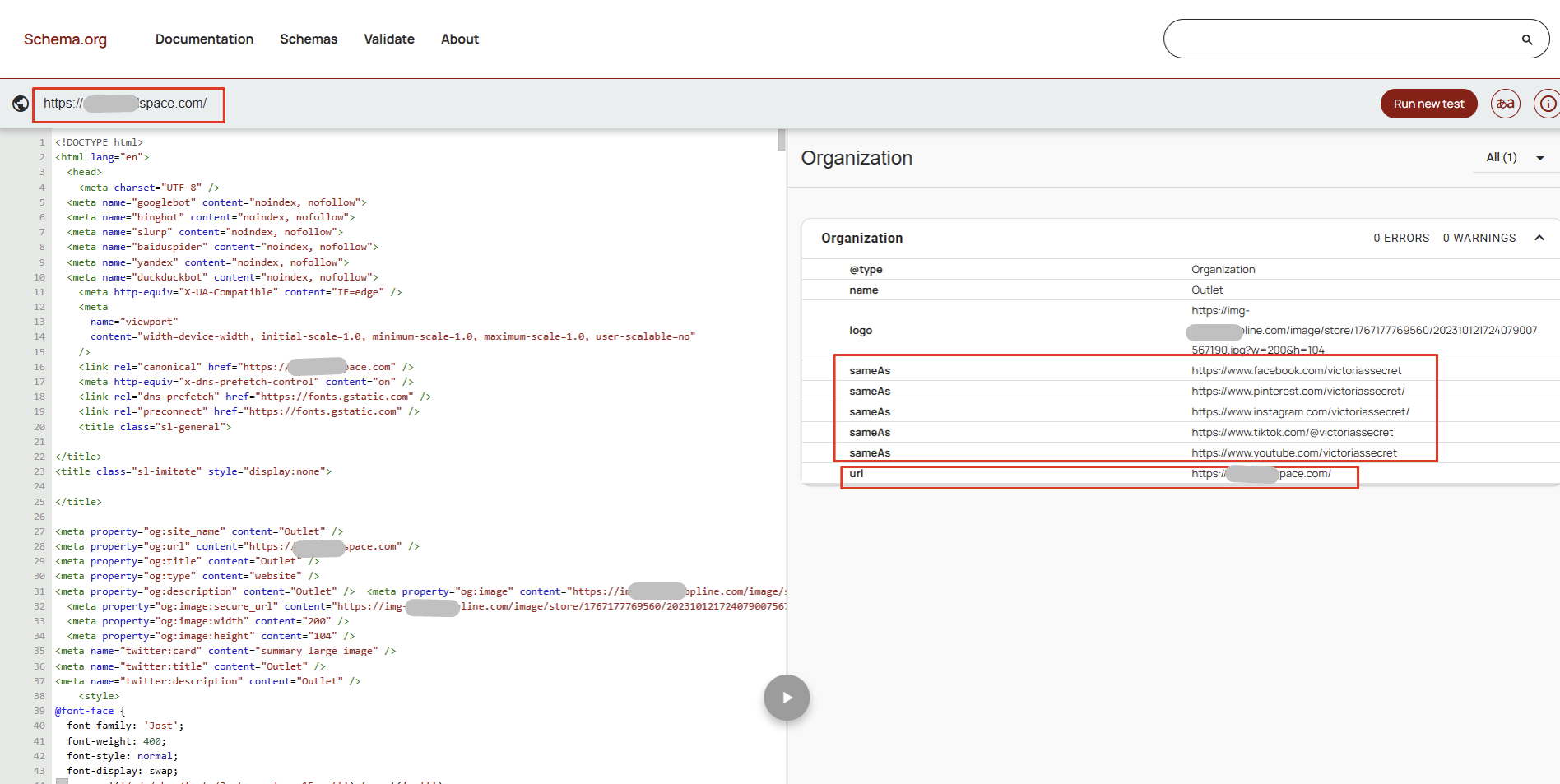
Assessment
The hidden references helped establish that the website was attempting to create a false sense of legitimacy while simultaneously operating credential-harvesting pages.
What initially appeared to be a trademark issue became a much stronger phishing case once the concealed indicators were identified.
Takeaway
When a domain contains credential-capture functionality but lacks obvious branding references, it can be worthwhile to examine source code, metadata, structured data, and embedded assets for additional context.